paint for exterior cement blocks
Sign up or log in to customize your list. Anybody can ask a question The best answers are voted up and rise to the top I have owned my house for 5 years. The outside wall of the laundry room in the basement is unfinished cinderblock. The cinderblock wall looks a bit unsightly, with dabs of paint, and the rough surface collects dust. The basement does not get water. In the summer, I run a dehumidifier. What are the pros and cons on painting the interior side of the cinderblock wall? If there are no real cons, what type of paint should I consider using? You need to paint the block first with block-filler paint then your finish coat. However, if you regularly have moisture coming through the the basement wall the only way for it to dry is to the inside. By painting the wall you will trap the moisture behind the wall which will eventually cause the paint to fail. One coat of a latex primer/paint may improve your appearance and still allow the wall to breathe.

The only real cons are taking it off if you ever want to & putting it on in the first place. The pit holes or pock marks will need to be dabbed with a brush after your primer or sealer gets rolled-on & then again after your first & 2nd finish coats. But, you're right & those are the pros of painting it. Keeping it maintained is nothing really, if you get some peeling or flaking in the future, you just scrape it off with a putty knife or scraper & paint over it with the rest of the wall. An Exterior Masonry Sealer or Primer goes on first & then an Interior 100% Acrylic paint. You'll want at least 3 finish coats in order to flatten it out reasonably. Wait a day or even 2 between coats, including after the primer or sealer goes on. The wall will take a full month to cure. pros - looks better, smoother surface that makes less dust cons - seals the surface up well which prevents moisture from evaporating from the block. if its 100% sealed on the outside, it wont be an issue, but if you have any moisture, it will trap it in the block.
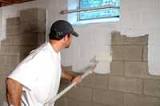
painting block is an extremely common commercial/industrial finish process. the trick is to use the right approach and material. step 1 - fill and seal with concrete prep coat. this material is usually sprayed or put on with a texture gun, but if you want you could probably do it by roller (i wouldnt bother, just spray it) step 2 - paint over with whatever you want omit the sealer and you can count on 10 coats minimum to seal it up properly. Sign up or log in Sign up using Google Sign up using Email and Password Post as a guest By posting your answer, you agree to the privacy policy and terms of service. Not the answer you're looking for? Browse other questions tagged basement cinderblock or ask your own question.Sorry there seems to have been a system error. The file you are looking for may have been moved to another location or can't be found in the DataBase. Use the Custom search form to find what you are looking for or click

What is the best paint for a masonry/concrete/cinder block basement? The best paint for a masonry, concrete or cinder block basement is a waterproof coating that is formulated for residential use on interior masonry or concrete.
home decor stores in state college paHomeowners should select the acrylic paint, rubber coating or waterproof sealer that is most appropriate for their homes and the condition of the surface.
home decor target audience What type of paint do I use for a bird bath?
home decorating stores jacksonville fl How should you paint cinder block walls? What are some products that remove paint from metal? Certain products, such as INSL-X Waterblock and Behr Premium Basement and Masonry Waterproofer, are rated to resist hydrostatic pressure, which makes them good choices for a home that is prone to flooding or heavy rainfall.

HGTV recommends Rubberize It! for superior adhesion and waterproofing, especially in areas with very wet soil or flooding. TuffCrete manufactures acrylic-based masonry and concrete paints that may be painted or sprayed onto uneven surfaces, such as stucco or cinder blocks. Many manufacturers produce paints and stains in a variety of colors, while other coatings can be painted over once cured. Before applying any coating to basement walls or floors, the homeowner should repair or seal all leaks, holes and cracks. In most cases, the product may be applied to dry or damp surfaces. New concrete should be allowed to cure for at least 30 days before application. Some waterproof coatings require a primer or sealant prior to application, and many products require multiple coats. Homeowners should ensure they have adequate ventilation and follow all manufacturer instructions while applying the products. Learn more about Home Maintenance How do you seal concrete block walls? Seal a concrete block wall by cleaning and patching the surface and then applying a waterproofing paint or sealant designed specifically for masonry.

What is bitumen paint? Bitumen paint is a type of bituminous coating product that provides weatherproofing and corrosion resistance against the elements. It is used to coat ferro... How do you paint marble tile? To paint marble tile, wash the tile, rinse it thoroughly, sand the tile, then apply primer, paint and a protective urethane coating. You need liquid deterg... Who makes ColorPlace paint? ColorPlace paint is supplied by AkzoNobel, which is a Dutch paint and coating manufacturer. The brand ColorPlace is exclusively sold at Wal-Mart locations.... How do you reglaze tile? What is the best matte interior paint? What products remove spray paint from brick walls? What are some good sources for one-story house plans? How do you remove paint from baseboards? How do you level a house?FREE SHIPPING ON QUALIFYING ORDERS $49 OR MORE Prices, promotions, styles, and availability may vary. Our local stores do not honor online pricing.