exterior house paint sherwin williams

From the Color Experts at Sherwin-Williams: Exterior Color Selection Tips for Homeowners A: Assuming that a colorful and imaginative color scheme will cost a great deal more for product and labor. Unless the scheme is a "painted lady" with numerous colors, this is rarely the case. Accenting unattractive elements such as gutters, downspouts, a protruding garage door, air conditioning units, unevenly placed windows, etc. Ignoring neighboring houses: your color scheme choice should not clash with the neighbor’s house — it’s a lose-lose situation. Choose a scheme that blends with the neighborhood or stands out in a subtle, unobtrusive manner. Landscaping counts: consider tress that change color, flowering shrubs, flower gardens when selection colors, for compatibility. Heavily wooded lots will make colors look darker due to shade; also could camouflage homes, so attention to detail is needed. Greens are not a good choice in this situation. A: Color makes a first impression, an individual statement and can enhance curb appeal and even resale value;
a creative scheme versus the more typical white could be an opportunity to make that first impression. Don’t overlook interesting architectural detailing; it can often sparkle with a contrasting or accent color. Be observant: drive through various neighborhoods, established and new, to see color in action.
rustic wedding decor rentals mnMake note of appealing color schemes and consider adapting them to your own home.
outdoor christmas decorations christian Assuming no structural work is needed, color/paint is the most cost-effective approach to changing the appearance of a home.
benjamin moore most popular exterior house color Define the entryway by using color as a "Welcome" sign.

Windows are an opportunity: they give character to a house. Outlining them lends crispness to the color scheme. A: Consider the colors that can’t change (for example, elements such as roofing shingles, and brick, slate, and stone accents or features) and use these elements as color resources because there are numerous shades and hues in building materials. A charcoal gray shingle for example could have flecks of gray-green or gray blue that could be found on a paint color strip or incorporated into the color scheme. Examine color samples outdoors, at various angles and different times of the day. Consider buying small quantities of desired colors and paint a section of the house where body, trim and accent colors can be viewed together. Pay attention to geography, specifically the intensity of the sun. Intense sun washes out colors, so brighter colors are suitable in sunbelt areas but might stand out like a sore thumb in northern locations. A: A large home on a small lot painted white or a light color - for instance, a tinted neutral - can make the house seem larger and the lot seem smaller.
Dark colors can make a home look smaller but more substantial. A safe and effective approach to color placement is to select two tints or shades from the same color strip a few shades apart. Either the lighter or the darker shade could be used for the body and the opposite for the trim. A contrasting accent color could punctuate the door. Lighter colors on a porch will make a home feel more "approachable" and welcoming. Height can be scaled down by painting the upper portion of a tall house a deeper tone than the bottom portion (reverse trim color). This is also effective on a small lot or when landscaping is immature. Conversely, a darker color on the lower portion grounds the house to the earth. Light or white is a good choice for windowsills for reflection of the sun’s heat and light. Light colors advance in space; If a house is placed far away from the curb, painting it a light color will visually bring it forward. Be judicious with accent colors, but certainly accentuate the positive.
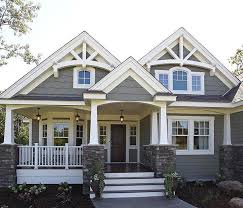
A: Traditionally, white and light colors were perceived to be safe choices. However, as consumers have gained more confidence with color, and as a broader spectrum of colors have been made available for exterior use, those "traditional" approaches are changing. Today, tinted neutrals that play off landscaping and other building materials are increasingly being used, as are midtone values of neutrals.“This paint palette is reminiscent of Scouts at summer camp—dark uniforms all alike with bright green scarves tied at the collars.”–Bobby McAlpine, McAlpine Tankersley Architecture, Montgomery, Alabama Body: Black Fox (SW7020) by Sherwin-Williams; Trim: Sassy Green (SW6416) by Sherwin-Williams; Pick the Right Exterior Paint Colors The South's top architects share their best exterior paint color combinations for your home. Committing to a paint color for the exterior of your home is well, quite the commitment. Especially when you factor in the nuance of color—how shades can be so different depending on light, texture, and the colors around them.
Luckily, you don’t have to navigate all the possible exterior paint color combinations alone. We’ve asked some of the South’s most respected architects for their input on exterior house paints. Whether you’re looking to achieve the perfect patina, or to play up a coastal vibe, or are aiming for a harmonious, nature-inspired palette, these architects can guide the way to the best exterior house paint colors. If you’re not sure what you want, this list may help spark some new exterior paint color ideas. (Or, try this quiz for a fun start.) A few things to think about: location, light, architecture, and scale. Looking looking for interior inspiration? We have that too, broken down by color.Nesters FloridaCourtney DickeyFlorida VacationVacation HomesFamily VacationsFlorida FamilyFlorida HomeAdams StudioLight ColorsForwardRepose Gray by Sherwin Williams. The shingles are stained in an acrylic, Repose Gray by Sherwin Williams. #ReposeGraySherwinWilliams #exteriorpaintcolor #homeExterior Interiors by Courtney Dickey of TS Adams Studio.